
The Engineer’s Guide to Choosing the Right Pneumatic Cylinder for Your Application
Posted by OCPneumatics on Dec 2nd 2025
Introduction: Why Cylinder Selection Matters
In industrial automation, pneumatic cylinders are the muscle behind motion - translating compressed air into precise, repeatable mechanical force. Yet, choosing the right cylinder isn't as simple as picking one off the shelf. Stroke length, bore size, mounting, and load requirements all affect performance and longevity.
This guide walks engineers and maintenance teams through the key factors that determine which SMC actuator or low-profile cylinder best fits their application - whether you're designing a new automation system or upgrading an existing one.
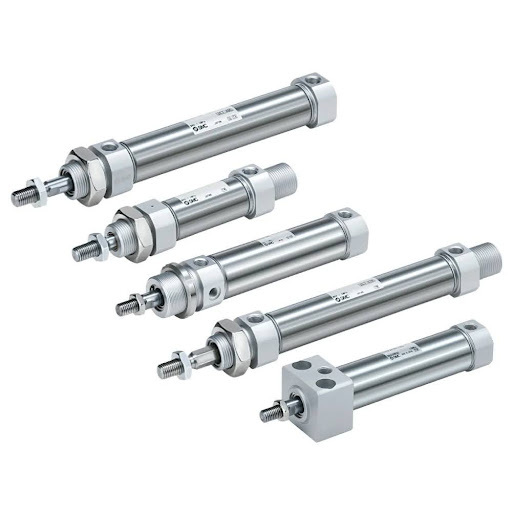
1. Understand How Pneumatic Cylinders Work
A pneumatic cylinder uses compressed air to move a piston inside a sealed barrel. When air pressure is applied to one side of the piston, it moves linearly - producing motion for clamping, pushing, lifting, or rotating tasks.
Different cylinder types handle these motions differently:
- Single-acting cylinders: Air pressure moves the piston one way, and a spring returns it.
- Double-acting cylinders: Air moves the piston in both directions, offering greater control and speed.
- Rodless cylinders: Provide long strokes in compact spaces, ideal for conveyor or packaging automation.
At OCPneumatics, you’ll find all these variations from SMC, one of the most trusted names in pneumatic motion control.
2. Choose by Pneumatic Cylinder Type
Here’s a quick comparison of common SMC actuator types:
|
Cylinder Type |
Description |
Best For |
Example SMC Series |
|
Standard round body |
Basic linear motion, available in single/double acting |
General machinery, OEM use |
SMC NCA1, CQ2 |
|
Compact cylinders |
Short body with limited stroke |
Space-restricted systems |
SMC CQS, CDQ2 |
|
Guided cylinders |
Integrated guide rods for side-load resistance |
Pick-and-place, packaging |
SMC MGP |
|
Rodless actuators |
No external rod, slide carriage instead |
Long stroke or tight enclosures |
SMC MY1 |
|
Rotary actuators |
Convert air pressure into rotation |
Indexing, valve operation |
SMC CRB |
Each has its own balance of size, stroke, and precision. OCP’s Elite Search Bar lets you filter by stroke length, bore, or mounting type in seconds — no catalog flipping required.
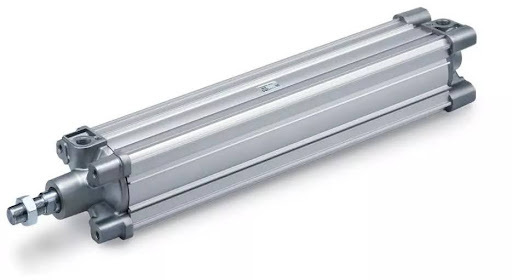
3. Match Stroke Length to Your Application
The stroke length determines how far the piston travels. Too short, and you won’t reach the full range of motion; too long, and you risk bending rods or wasting air.
- Short stroke (<25 mm): Compact machines, limited travel, pick-and-place.
- Medium stroke (25–200 mm): General automation, assembly lines.
- Long stroke (>200 mm): Conveyor transfers, sliding mechanisms, material handling.
When in doubt, calculate the total required movement — then add 10–15% as a safety margin for cushioning and mounting tolerances.
4. Understand Mounting Styles
Cylinder mounting directly affects motion alignment, side load resistance, and maintenance ease. Common options include:
- Front flange: Mounts the cylinder body to a stationary surface; great for pushing actions.
- Rear flange or clevis: Allows pivot motion; common in automation arms.
- Foot mounts: Simple base mounting; ideal for horizontal setups.
- Trunnion mounts: Enable rotation around a fixed axis; often used in large machinery.
OCP’s Part Builder Tool simplifies this — allowing you to choose mounting style, bore, stroke, and other features to generate an instant custom SKU. No guessing, no mismatched parts.
5. Consider Load, Speed, and Air Pressure
Pneumatic cylinder performance depends on the relationship between bore size, air pressure, and load weight.
- Force (lb) = Pressure (psi) × Piston Area (in²)
For example, a 2-inch bore at 80 psi delivers ~250 lb of force. If your application involves heavy lifting, opt for a larger bore or double-acting model for consistent power.
Also factor in:
- Speed: Faster movement may require flow control valves or cushions.
- Temperature & environment: Choose stainless or coated versions for corrosive or dusty areas.
6. Energy Efficiency and Maintenance Tips
A well-selected pneumatic cylinder reduces energy costs and downtime. Consider these:
- Use air preparation units (filters, regulators, lubricators) for consistent pressure.
- Check seals regularly; leaks reduce efficiency.
- Select cylinders with cushioning to extend service life.
- Pair with flow controls for smooth start/stop operation.
SMC cylinders are known for their low friction and high-precision seals, minimizing air loss and maximizing output.
7. Why Choose OCPneumatics.com
Engineers trust OCPneumatics because it’s built for problem-solvers:
✅ Elite Search Smart Bar: Instantly filter products by specs or model number.
✅ Part Builder Tool: Configure parts by bore, stroke, and mount — no catalog confusion.
✅ Unified Product Line: The only online distributor offering SMC, USA Welch, and USA Thomas together.
✅ Flexible Financing: Apply for up to $10,000 in credit for large or recurring orders.
✅ U.S.-based Support: Real experts who understand pneumatics, not just sales scripts.
Together, these tools make OCPneumatics not just another supplier — but a digital engineering partner that simplifies part sourcing and system design.
8. Quick Selection Example
Let’s say you’re automating a packaging line:
- You need a compact cylinder for a 30 mm stroke, vertical motion, and side-load resistance.
- Using OCP’s Part Builder, you select SMC MGP-32-30, guided style, double-acting.
- You instantly get force data, CAD model, and mounting options — ready to order.
That’s how modern pneumatic cylinder selection should work: fast, accurate, and data-driven.
Conclusion: Make Smarter Choices with OCP
Choosing the right pneumatic cylinder starts with understanding your motion requirements, load, and space constraints — but ends with choosing the right partner.
At OCPneumatics, every SMC actuator is backed by expert support, intuitive tools, and fast delivery. Whether you’re upgrading an assembly line or designing from scratch, OCP helps engineers turn compressed air into controlled power.
Suggested FAQs
Q1: What factors should I consider when selecting a pneumatic cylinder?
A: Key factors include bore size, stroke length, mounting type, air pressure, and load.
Q2: What’s the difference between single-acting and double-acting cylinders?
A: Single-acting uses air in one direction with a spring return; double-acting uses air in both directions for more control.
Q3: Can I build custom part configurations on OCPneumatics.com?
A: Yes, the Part Builder lets you customize bore, stroke, and mount to generate an exact SKU.